The Iran War Shows A Major Weakness In The RV Industry


If you watch the popular YouTube channel RV Miles, you might have caught their recent video detailing how fast the RV industry is getting hit by the current fuel crunch. Gas prices are climbing again, and as Jason Epperson pointed out, it is not just the usual spring blend markup. Between global oil supply disruptions and crude oil prices swinging all over the place, diesel alone jumped over a dollar a gallon in just a month.

The RV industry is feeling the pain right as the spring buying season kicks off. Just look at the stock market. Winnebago, Thor, and Camping World have all taken a massive beating lately. Investors know that RV purchases don’t work out when fuel prices are high, and they also know that diesel prices are about to explode and stay high for most of the RV season.

And, the investors are right. Buyers are genuinely spooked, and honestly, who can blame them? Buying a fossil fueled RV right now means strapping yourself to an unpredictable roller coaster. The industry’s complete reliance on gas and diesel means their market stability is entirely at the mercy of global events. Unless they seriously look at decoupling from oil, they are going to ride this boom and bust cycle forever.

The Price Excuse Doesn’t Hold Up

The obvious excuse for not making a hard pivot to electric is price. Manufacturers love to claim that massive battery packs and EV drivetrains are just too expensive. But, let’s be realistic about what people are actually paying right now for their ICE rigs. When a luxury Class B van or a Class A motorhome regularly costs hundreds of thousands of dollars, there is absolutely room in the budget for cleaner and more efficient technology.

If a buyer is already dropping a quarter of a million dollars, an electric drivetrain isn’t the dealbreaker the industry pretends it is. Companies like Grounded are already showing what is possible, like when they built a 250-mile camper van on the BrightDrop platform. The technology is here, but the legacy builders are dragging their feet.

RV culture in general is still happy with fossil fuels, but new buyers aren’t willing to jump in when prices are high. Investors know this, and they know that failure to adapt will mean an industry that goes the way of Harley Davidson as younger buyers don’t get attracted to the lifestyle.

Trailers Can’t Wait For Better Trucks

Trailer manufacturers technically have an easier task since they don’t have to build a primary drivetrain. A travel trailer can be pulled by anything. A gasoline truck, a diesel truck, an electric truck. A team of horses. The trailer just gets pulled along for the ride.

But, doing nothing and hoping buyers switch to electric trucks later isn’t an option. It is a massive cop out. They can’t just keep building heavy, unaerodynamic bricks. They need to actively participate in the transition. Some companies, like Aliner with the Amp model, are taking this seriously by improving already efficient options and adding green value to make them work well with EV tow vehicles.

Other manufacturers are trying to reinvent things more thoroughly. Building in aerodynamic shapes and battery assisted axles turns a trailer from a massive towing burden into a self sustaining part of the solution. We have seen startups nail this concept recently. The Pebble Flow and the Lightship L1 both use their own battery packs and motors to propel themselves, basically eliminating the towing penalty.

Sadly, though, you won’t find most of these options on an RV dealer lot. The industry is going on like it’s the 1990s.

Tethered to the Pump

The RV lifestyle is supposed to be about freedom. Not only do you get freedom to roam, but freedom to have the comforts of home out closer to nature. For some people, this is a luxury. For others with medical conditions, sometimes it’s about the only way to stay close to nature.

Right now, most of the RV industry is tethered to the gas pump and propane sellers. If legacy brands want to survive the next decade of inevitable fuel shocks, they need to start pushing the envelope on electrification and efficiency today.

The Iran conflict should serve as a wake up call, not a reason to hit the snooze button.

Route 66 & Beyond: Getting Serious Again for 2026

If you’ve been checking the timestamps on this site, you’ve probably noticed a bit of a gap. Aside from a recent news roundup, things have been quiet here since 2024. I haven’t been idle—I’ve been busy over at CleanTechnica, working on other projects, and handling some family caretaking duties—but the “boots on the ground” mission of Charge To The Parks definitely hit a lull during 2025

For a while, I was “between” EVs, doing some towing with a gas-guzzling Suburban and trying to figure out the next move when an EV conversion project didn’t work out like I had hoped.

But recently, I had an “aha” moment that changed everything. I looked around and realized that the momentum for EV adoption and the infrastructure to support it was doing better than ever, but politicians and the mainstream corporate media were saying that EVs had “stalled”. The “experts” were saying towing on electric power was too hard, the naysayers were getting louder about even small EVs being undesired by the public, and charging infrastructure projects under the NEVI program had been stalled out by the very same government that blamed others for the lack of progress.

I realized that we’re in an “all hands on deck” moment, and that projects to show people that EVs and clean technology are not only useful but superior were needed now more than ever. It was time to not only get serious, but take things to another level.

With help from friends and family who I had been helping, I had the opportunity to do exactly that.

The New Rig: Wheeling, Dealing, and 170 kWh

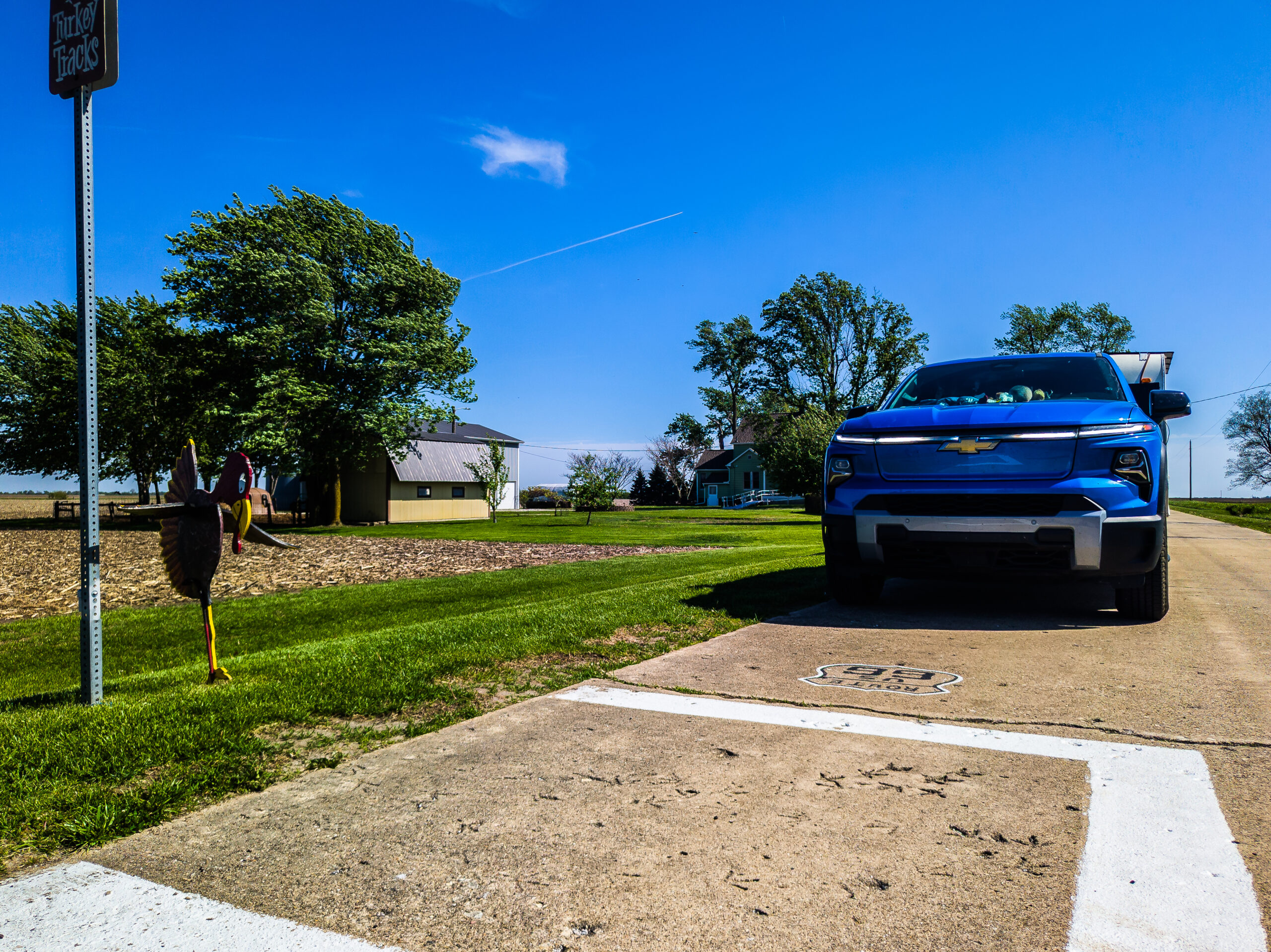
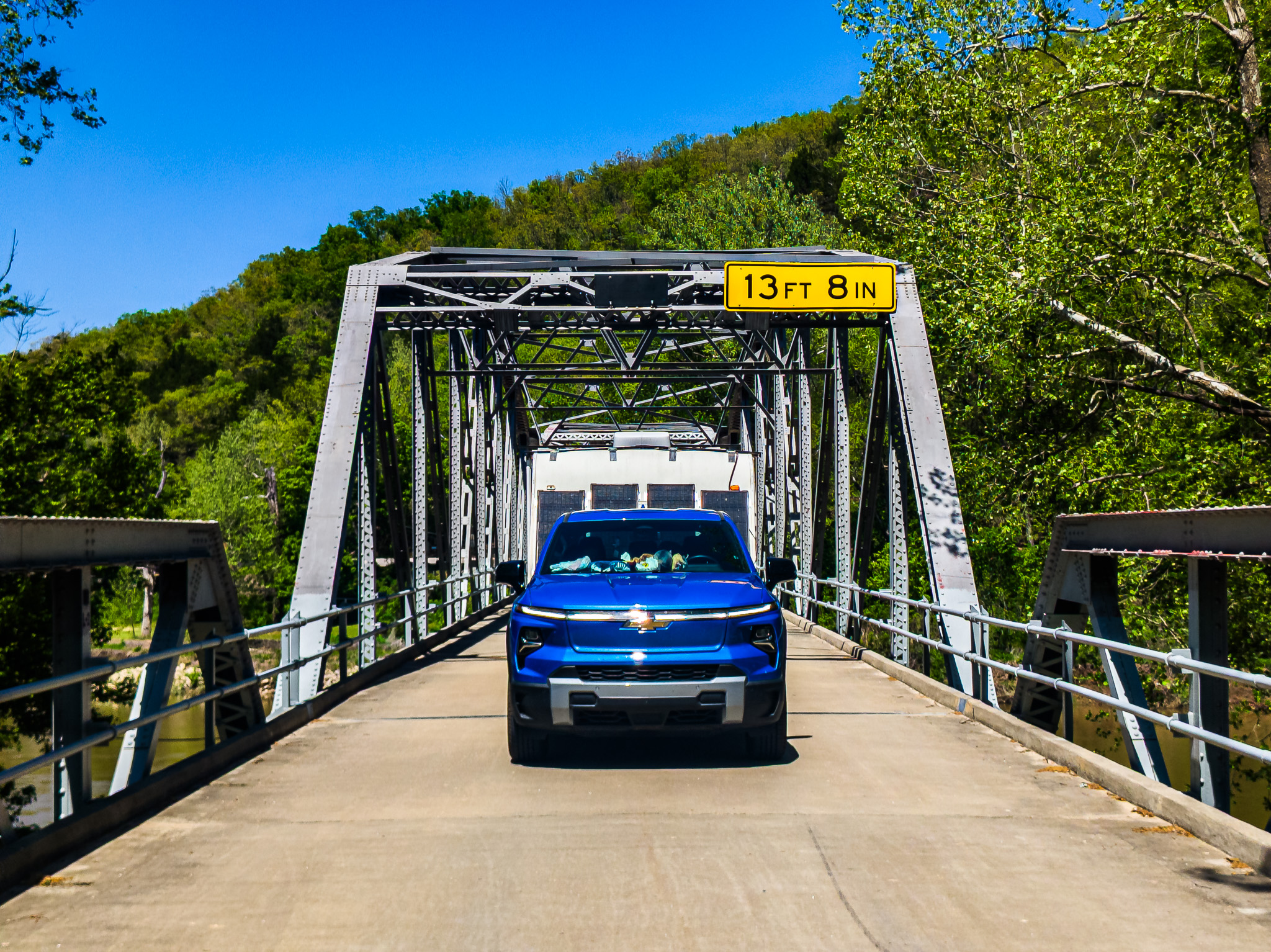
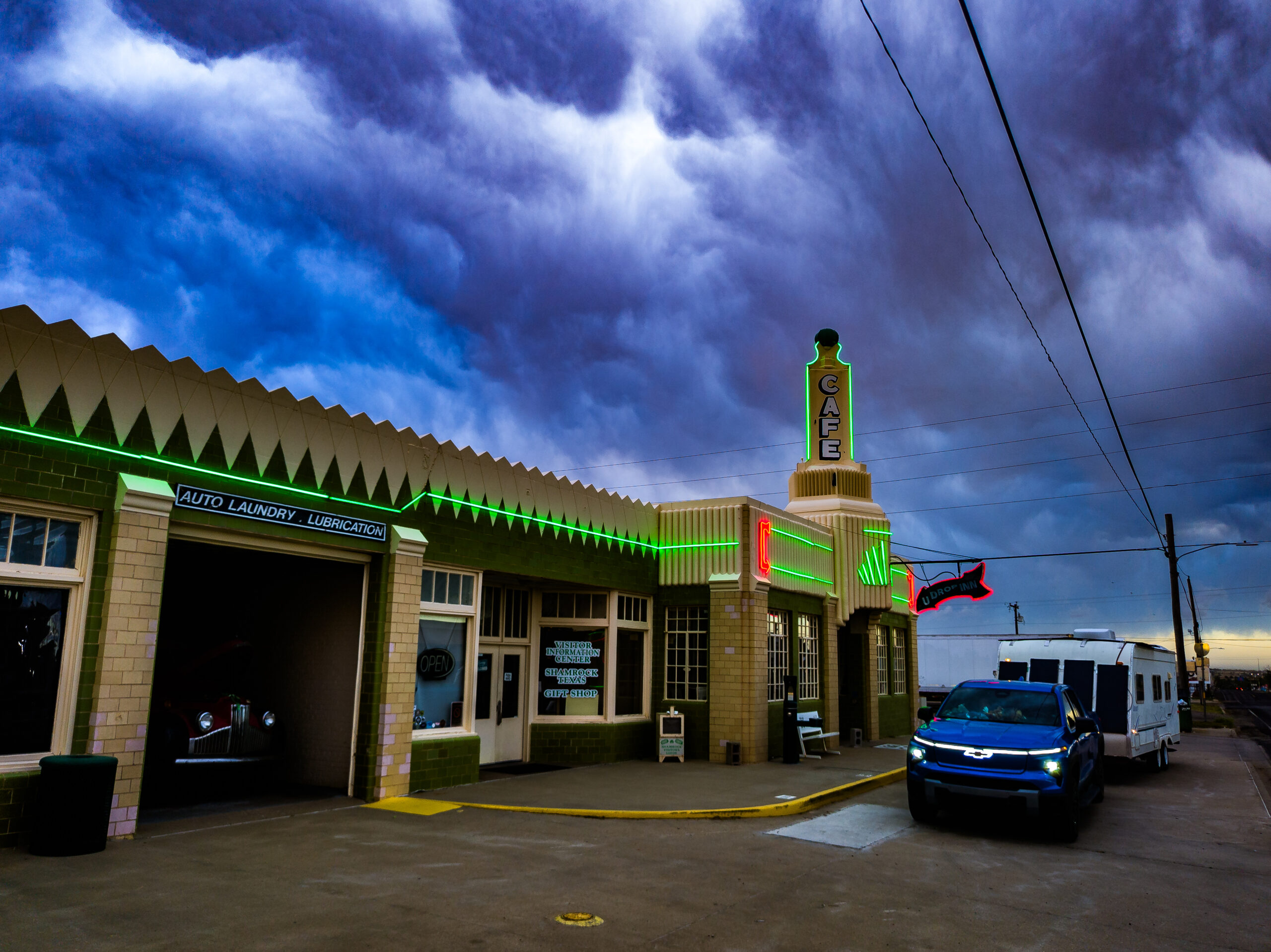
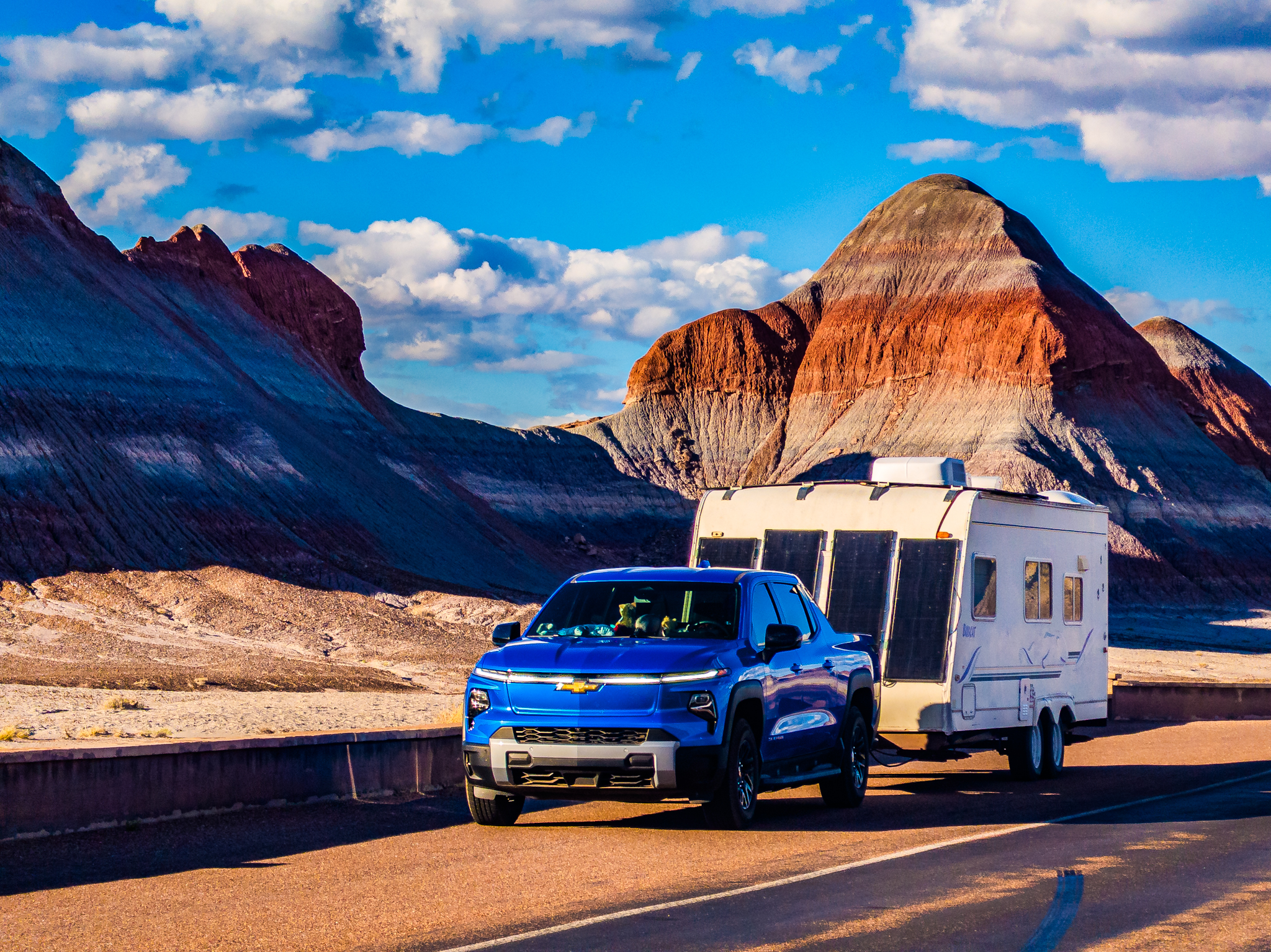
Getting back into a dedicated EV tow vehicle wasn’t as simple as walking onto a lot and putting a down payment on the table. It took some serious “wheeling and dealing” to make the numbers make sense, but I finally landed in a Chevrolet Silverado EV LT and even managed to drive off without a payment.

But, in true “don’t laugh, it’s paid for” style, this isn’t the $100,000+ RST trim you see in the glossy commercials. This is the LT with the 170 kWh battery pack that you can get for $20,000 cheaper. It’s got less range and less bells and whistles, but really, it’s the “sweet spot” for someone like me who actually uses a truck like a truck. It loses around 30 miles of range compared to the max range pack when towing, but the springs are unburdened enough that I can get away without using a weight distribution hitch that needs to be hooked and unhooked at many charging stops.

I’ve already been putting it through its paces, even testing the 112-mph top speed out in the Chihuahuan Desert (in Mexico, and for science, obviously). And, more importantly, I’ve figured out that it still gets usable range when towing!

Speaking of the trailer: forget the brand name. It was built when I was in high school, and I have a growing number of grey hairs on my head. What matters is what’s inside (and on top of) it. I’ve been busy with some DIY “Amateur Power Onboard” setups and efficiency mods. From custom battery storage and solar integration to aerodynamic tweaks that help fight the physics of towing, this trailer is becoming a rolling laboratory for how to do electric RVing on a reasonable budget.

There will be lots of upcoming updates on how I integrate my rolling power plant with the Silverado.

Route 66: The Second Century Begins

So, what’s the big plan for 2026 once everything is wired up? It starts in April with a journey I’m calling “Route 66: The Second Century Begins.”

We aren’t just doing a weekend trip. We’re driving the entire length of the Mother Road from Los Angeles to Chicago. But we aren’t stopping there. To make it a true “Charge To The Parks” epic, we’re continuing all the way to the Outer Banks to make it a coast to coast adventure!

Along the way, I’ll be hitting a long list of National Parks, National Monuments, and other NPS sites. I want to show that as Route 66 enters its second hundred years, the EV is the perfect tool to explore it. I’ve already shared a first look at the mission over on BlueSky, and the excitement there has been the fuel I needed to get this project back into high gear.

Why 2026 Matters

The goal for 2026 is simple: No more excuses. I’m going to show the real-world data—the charging speeds, the range hits, the “skinny pedal” moments, and the logistical hurdles. We’re going to find the charging deserts, and then we’re going to figure out how to cross them so that everyone else can do it, too.

Charge To The Parks was never just about seeing pretty places; it was about proving that the future of travel doesn’t have to be powered by a primitive pile of pistons under the hood. I’m back, the Silverado is ready, and the road is calling.

Let’s see what this second century looks like.

2/23/26 News Roundup: Towing Physics, Boiling Water on Batteries, and the Battle for Park Funding

Today, I’m starting something new to go with my posts about my own electric RVing and travel experiences: a daily news roundup that focuses on things that affect sustainable outdoor recreation. Let me know what you think, and if this is something readers end up loving, I’ll keep doing it a few times a week!

———————————————

If there is one thing we learn over and over in the cleantech and outdoor space, it’s that physics and weather don’t care about marketing brochures. Today, we are looking at some brutal winter storms shutting down the East Coast, avalanche realities in the Rockies, and a massive legislative fight brewing over how we pay to keep our public lands open.

But we also have some genuinely cool hardware updates. Let’s look at what works, what doesn’t, and how we are getting out there this week.

The Top Story: The LASSO Act and the Fight for Public Land Revenue

There is a massive policy shift winding its way through the House right now that could change how our trailheads and remote roads are maintained. The Subcommittee on Federal Lands just reviewed H.R. 34, known as the LASSO Act. The bill proposes taking 10% of the revenue generated on federal public lands—from things like recreation, energy development, and grazing—and dropping it directly into the Social Security Trust Fund.

The idea is to give the American public a direct financial stake in the economic output of our public lands. But here is the wrench in the works: the Department of the Interior heavily relies on those exact revenues to fund the massive deferred maintenance backlog in our national parks, manage hazardous wildfire fuels, and fix washed-out roads.

If you strip 10% of the gross revenue out of the land management budget, those trailhead bathrooms aren’t going to fix themselves. This comes right as the National Park Service is heavily tweaking its pricing, raising annual passes to $250 for non-residents while keeping them at $80 for U.S. residents to try and cover these massive operational costs. There’s a lot more to this story (including accusations of isolationism, racism, etc), but the main point still stands:

If they’re looking to bring more money into the parks, removing 10% of it makes no sense. Public policy needs to make sense!

Charging Update: I-80 Gets Lit Up

If you drive an EV through Pennsylvania to hit the state forests or the PA Wilds, Interstate 80 is your main lifeline. Thankfully, PennDOT just opened three new federally-funded fast charging stations right on the I-80 corridor at Kylertown, Mill Hall, and Mifflinville. On top of that, the state is rolling out another $100 million for community-focused chargers this year.

Also, if you are eyeing the upcoming 2026 Jeep Recon or Dodge Charger Daytona, Stellantis just officially confirmed that their EVs are gaining access to Tesla’s massive 36,000-stall Supercharger network. The charging map is finally filling in where the pavement ends.

The Quick List (Other Notable Stories You Can Read Up On)

The Physics of EV Towing: We have new field data on the 2026 GMC Sierra EV AT4 towing a 30-foot camper. Yes, it has 12,500 pounds of towing capacity and the instant torque is incredible for trailer sway and hill climbs. But pulling a giant box punches a massive hole in the air, meaning your range will take a brutal hit from the aerodynamic drag. Know your route, and know your charger pull-throughs.

• Boiling Water on a 10-pound Battery: The new Bluetti Elite 30 V2 portable power station is breaking the rules of small batteries. Despite only having a 288Wh capacity, it runs a 600W inverter that can actually boil a kettle of water or run a rice cooker without tripping the safety switches. It is perfect for a quick-deploy tailgate or running a Starlink Mini.

Avalanche Realities in Idaho: A 21-year-old snowmobiler was tragically killed by an avalanche in Clark County, Idaho. Heavy new snow has completely overloaded weak layers from January, making it incredibly easy to trigger massive slides even from low-angle terrain. Check your local avalanche center forecasts before you hit the backcountry.

Electrify America Upgrades in CA & FL: EA is currently taking several stations offline (including key adventure routes in Bishop, Garberville, and Olancha, CA) to rip out old hardware and install their latest generation of liquid-cooled chargers. It’s a short-term pain for long-term reliability.

The Last Word

We can obsess over battery chemistry and torque curves all we want, but at the end of the day, Mother Nature is the chief engineer of every outdoor trip. Whether it’s a blizzard shutting down the entire highway grid in New York or weak snowpack causing an avalanche in Idaho, respect the weather, carry redundant gear, and know when it’s time to just stay home or find someplace else to go.

National Parks EV News Roundup: Thanksgiving Edition

I know the Charge to the Parks website hasn’t been very busy lately, and that’s something that’s going to change soon. I’ve been working very hard behind the scenes to get ready for some really cool trips in the near future! Be sure to visit often or follow me on one of the social media sites (links at top of page) to see a really cool announcement in the near future.

In the meantime, I have been doing a lot of work sharing news about EVs in national parks at CleanTechnica. Here are a few of the best articles from the last few weeks!

Thanks for following and supporting Charge to the Parks!


Bluesky & Other Social Links Added To Site

With all of the people leaving X/Twitter recently, I’ve decided to set up a presence on BlueSky and share links to other places. The BlueSky account now is just a simple bridge (using Bridgy Fed) to publish articles from here onto BlueSky, but hopefully more features are added soon, like following back and comment integration.

In the coming days, I’ll see what other things I can do to automate posting to other social media networks so that more people can follow and participate in this project without having to use X/Twitter.

National Park EV News Roundup

Over at CleanTechnica, I recently wrote several interesting articles about national parks and EVs.

First off, there’s a new EV charging station just outside of Arches National Park. Electrify America has partnered with Rocky Mountain Power to open an 8-stall station, including one dedicated pull-through stall. Plus, several others could work well for people pulling trailers with some creativity. This brings the full number of EV charging stalls in Moab, Utah to 16 for non-Tesla vehicles and 20 for Teslas.

Another interesting thing is just how many EVs I saw on the Blue Ridge Parkway and in Great Smoky Mountains National Park. Compared to the other western parks I typically visit, there was just a crazy number of EVs. In the article, I explore why this might be.

While I was out that way, I got a chance to test out my Bolt-powered campsite. I use a power inverter to pull power from the Bolt’s battery, and use it to charge a Jackery 3000 Pro. This in turn powers a slide-out kitchen in my trailer, heat or AC for Shiftpod tents, and anything else I’d like. When there’s good sun, I also have 1200 watts of solar power available.

Sadly, I’ve had to make a number of repairs and upgrades to the trailer (you can learn more about that struggle here). I still need to make some serious improvements to get the trailer ready for its next journey out to explore the EV charging situation. If you’re interested in supporting Charge to the Parks on these journeys, please consider donating here or sharing the fundraiser with friends and family!

New and Updated Guides for Blue Ridge Parkway and Great Smoky Mountains

While the site didn’t change much in May and June, that’s only because we were busy traveling to several parks in an EV! While traveling to attend an important EV event in North Carolina, we stopped at Hot Springs National Park in Arkansas, Great Smoky Mountains National Park, and the Blue Ridge Parkway.

Since visiting, I’ve updated the page for the Great Smoky Mountains, and I created a new page for the Blue Ridge Parkway. A new page for Hot Springs National Park is coming soon.

Along the way, we towed a custom camping cargo trailer about 4,000 miles, which really tested the limits of our Bolt EUV. This is obviously not an ideal travel setup, but it does show that EVs, even budget ones that charge slower than others, are up to the task and people can have a good time.

Our Chevy Bolt EUV and custom trailer charging at a Circle K in Boone, NC near the Blue Ridge Parkway.

Welcome!

The goals for the Charge to the Parks project are to:

  • Help people understand that you CAN get to the most beautiful and fun places in America on electric power, even with an RV!
  • Prove that you don’t need to be wealthy to do it
  • Help people with nearly any EV to to these beautiful places with as little pain and struggle as possible
  • Encourage parks and businesses near the parks to invest in EV charging, e-bike, and other infrastructure needed to make the experience better

How I’m doing this:

  • Providing travel tips for people taking electric road trips to America’s parks
  • Provide vital information for as many parks as possible over time
  • Share fun and inspiring stories of people successfully visiting the parks in EVs
  • Networking with parks, affiliated non-profits, businesses, and drivers to move things forward

Want to follow or help with the project? The best way to start is by following me on X/Twitter. More options for social media and subscriptions are coming soon!